Social media never sleeps. Managing it manually? That’s a full-time job nobody signed up for. Smart marketers today rely on automation to stay ahead. That’s exactly why the 8 best social media automation tools I’m using in 2026 matter so much right now.
These tools don’t just save time. They multiply your output without burning you out. From scheduling posts to tracking brand mentions, the 8 best social media automation tools I’m using in 2026 handle the heavy lifting for you. Whether you’re a freelancer, a growing startup, or a full-scale agency, there’s something on this list built for your workflow. Let’s dive into what actually works.
What Is A Social Media Automation Tool?
A social media automation tool connects all your accounts in one place. It lets AI handle posting, scheduling, and monitoring so you don’t have to do everything manually every single day.
Think of it as your digital marketing assistant. It helps you ideate, create, and track performance across platforms. You stay creative while the tool handles the repetitive grunt work.
What Tasks Can Social Media Automation Tools Handle?
These tools tackle more than just scheduling posts. They monitor brand mentions, auto-generate captions, analyze engagement metrics, and even respond to followers through automated DM sequences built into the platform.
Here’s a quick look at the core tasks these tools handle:
| Task | What It Does |
| Scheduling & Posting | Auto-publishes content across multiple platforms |
| Brand Monitoring | Tracks mentions and keywords in real time |
| Content Generation | Creates captions, hashtags, and post ideas using AI |
| Performance Analytics | Generates automated engagement and growth reports |
| Follower Engagement | Sends auto-responses and manages DM sequences |
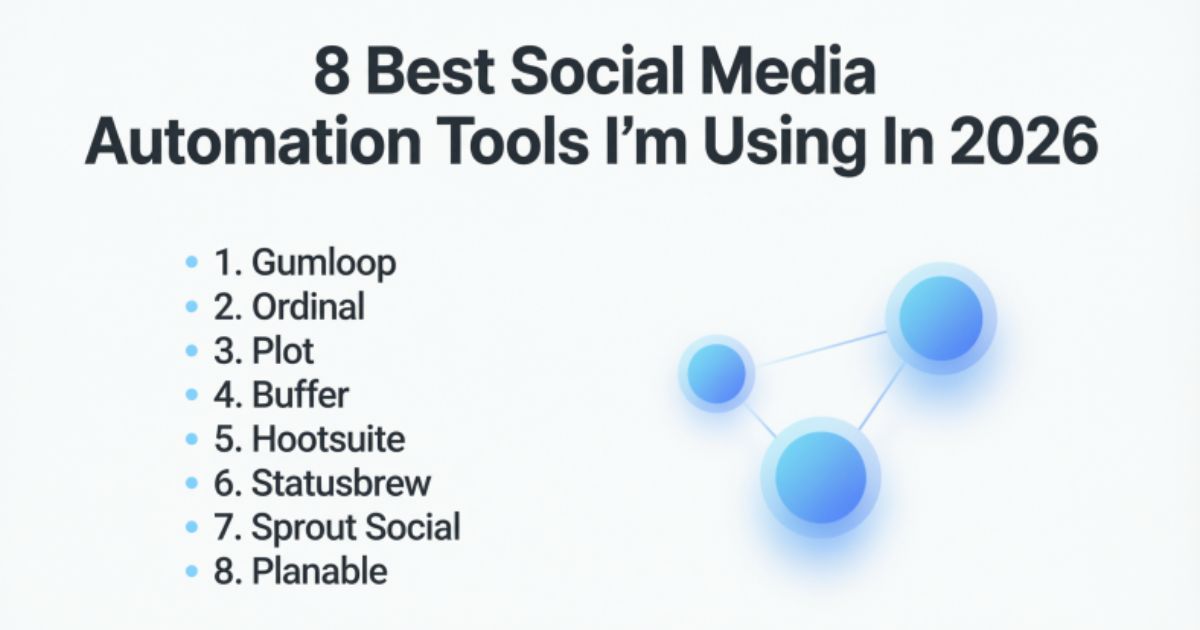
8 Popular Social Media Automation Tools In 2026
Learn more:5 Best AI Web Scraper Tools I’m Using In 2026 (Free + Paid)
Picking the right tool changes everything. The 8 best social media automation tools I’m using in 2026 cover every need. From simple scheduling to advanced AI workflows, this list has you covered.
Each tool on this list serves a different type of user. Freelancers, agencies, startups, and enterprise teams all have unique needs. These 8 best social media automation tools I’m using in 2026 deliver real results.
1. Gumloop
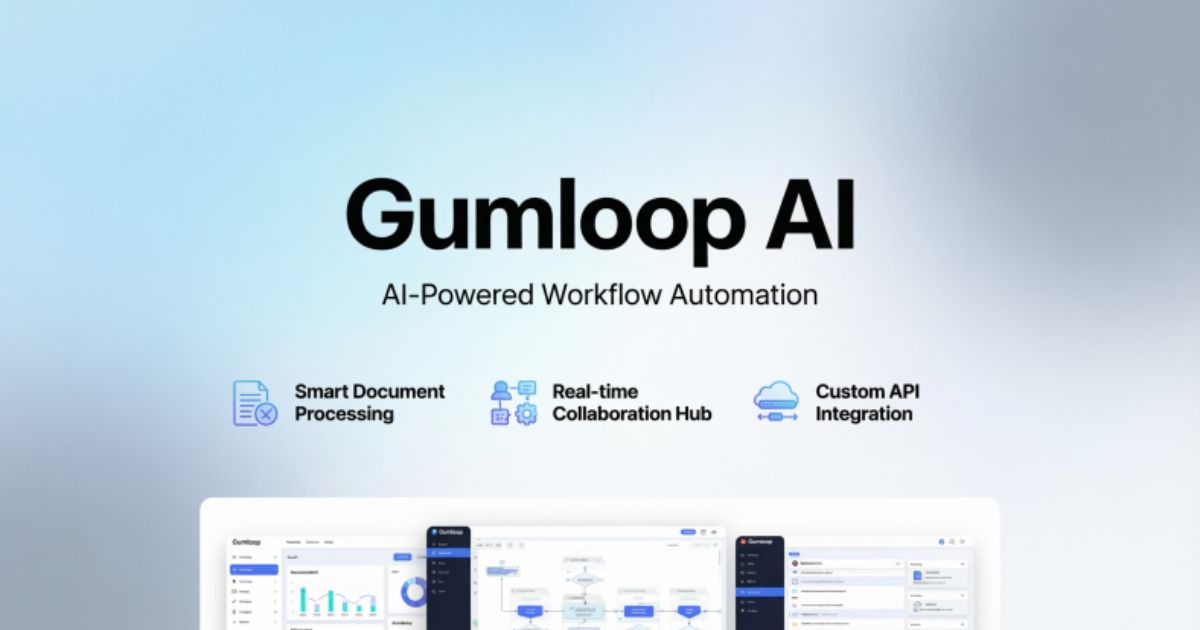
Gumloop is a powerful marketing automation platform built for AI-driven workflows. It connects your social media accounts and lets you build custom automations without writing a single line of code.
What makes it stand out is Gummie, its built-in AI chatbot. Just talk to it naturally and it builds your automation. It’s like having ChatGPT with access to all your accounts already.
Gumloop Pros And Cons
Pros:
- Connects any LLM like Claude, ChatGPT, or Gemini
- Gummie builds automations through simple conversation
- Template marketplace gives you instant workflow ideas
- Generous free plan to get started without spending anything
Cons:
- Works best when you already have a workflow in mind
- UI can shift slightly as new features roll out regularly
Gumloop Pricing
| Plan | Price | Key Features |
| Free | $0/month | 2k credits, 1 seat, Gummie agent |
| Solo | $37/month | 10k+ credits, unlimited triggers, webhooks |
| Team | $244/month | 60k+ credits, 10 seats, Slack support |
| Enterprise | Custom | SCIM/SAML, audit logs, AI model control |
Gumloop’s free plan is genuinely useful. You get real automation capabilities without paying anything upfront. Upgrading unlocks serious power for growing teams.
Gumloop Reviews
Real users love what Gumloop delivers daily. David Phelps, VP at Albert, says any team member can now turn manual processes into automated workflows without writing code.
Fidji Simo, CEO at Instacart, credits Gumloop with helping all teams adopt AI efficiently. It’s improved operational efficiency across the entire organization significantly.
2. Ordinal

Ordinal, formerly known as Assembly, is a full end-to-end social media automation tool. It handles drafting, planning, and scheduling content across LinkedIn, X, Instagram, TikTok, and more platforms.
Fast-growing startups like Beehiiv, Clay, Mercury, and Zapier trust Ordinal daily. Its Slack integration notifies your whole team when posts go live so everyone can engage immediately.
Ordinal Pros And Cons
Pros:
- Integrates with most major social media channels seamlessly
- Full editorial calendar with auto-publishing built right in
- Realistic social previews before anything goes live publicly
- Collaborative features let multiple team members work together
Cons:
- Pricing feels steep for startups with tight budgets
- Analytics features only unlock on higher-tiered plans
Ordinal Pricing
| Plan | Price | Key Features |
| Starter | $95/month | 3 seats, 4 profiles, AI content creation |
| Pro | $215/month | Unlimited seats, analytics, approval workflows |
| Enterprise | Custom | LinkedIn leads, API access, SAML/SSO |
All plans include a 14-day free trial. That’s enough time to explore the platform and decide whether it fits your team’s workflow before committing financially.
Ordinal Reviews
Ordinal earns a perfect 5 out of 5 stars on Product Hunt. Users praise its clean interface and powerful team collaboration features that make social media management genuinely enjoyable.
Early adopters highlight how quickly it replaced multiple tools in their stack. For growing teams managing multiple platforms, Ordinal simplifies everything into one smooth workflow.
3. Plot
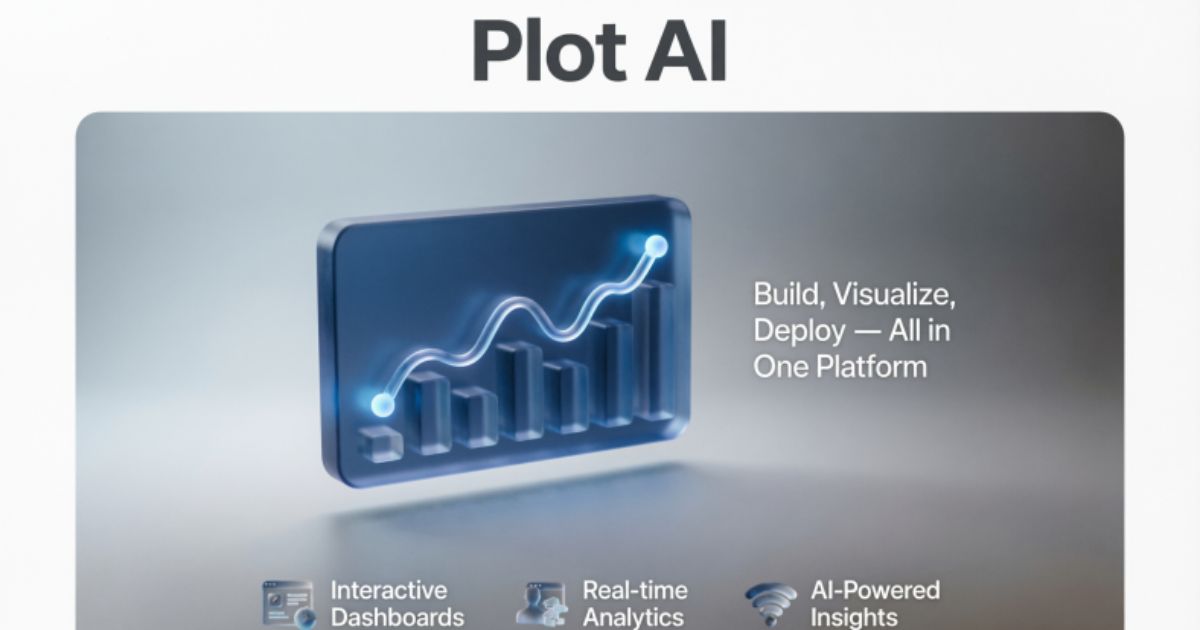
Plot is an all-in-one social media platform built specifically for UGC content automation. It gives brands a community hub to build a database of passionate customers and brand evangelists.
Its AI tracks video conversations about your brand even when you aren’t tagged. That’s a rare capability. Visa, Tory Burch, and Cava already use Plot to power their strategies.
Plot Pros And Cons
Pros:
- UGC database helps leverage real creators in your content
- Social trends feature uncovers high-engagement content opportunities
- AI analyzes untagged videos for deep social listening data
- Trusted by major consumer brands across multiple industries
Cons:
- Community hub and social listening only available on Enterprise
- Lacks broader automation features found in other platforms
Plot Pricing
| Plan | Price | Key Features |
| Starter | $0/month | 5GB storage, tasks, mobile app |
| Basic | $15/user/month | Unlimited collections, 100GB storage, unlimited trends |
| Enterprise | Custom | AI video listening, community hub, SSO |
Plot’s free Starter plan gives you a solid foundation. Upgrading to Basic at just $15 per user unlocks unlimited collections and trend discovery tools worth every penny.
Plot Reviews
Plot scores a perfect 5 out of 5 stars on Product Hunt from verified users. Reviewers highlight its unique ability to track untagged video mentions as a genuine game-changer.
Consumer brands particularly love the UGC database feature. It transforms loyal customers into content creators and dramatically reduces the time spent sourcing original social media material.
4. Buffer
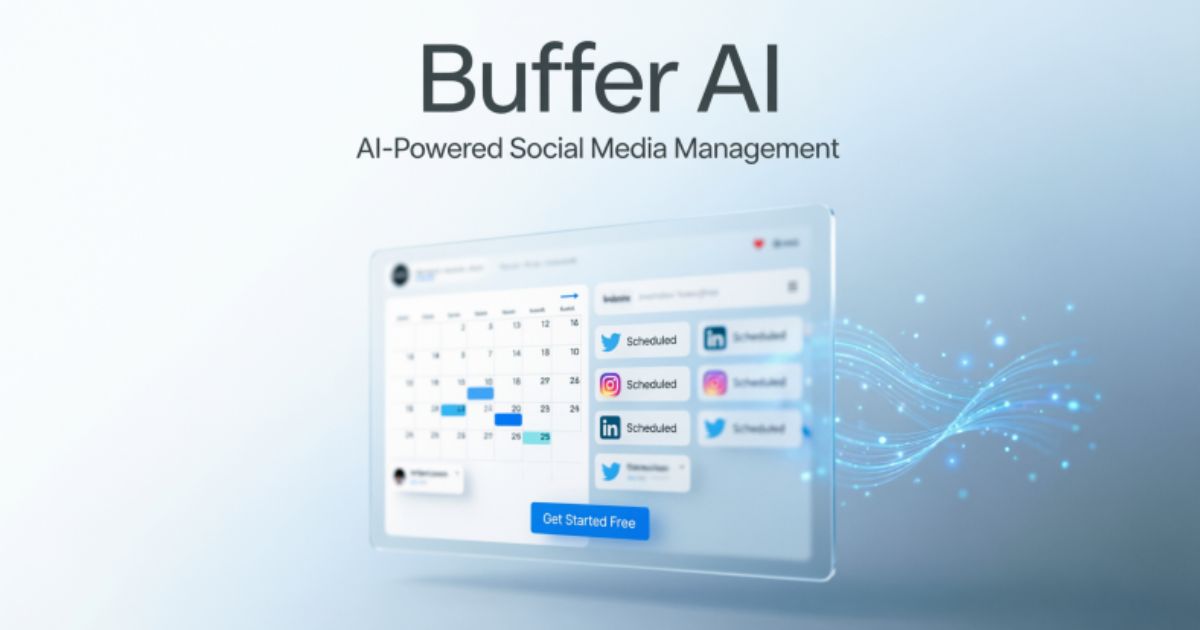
Buffer is one of the most trusted names in social media scheduling and cross-posting. Its AI Assistant brainstorms content ideas and creates platform-specific posts automatically without much manual effort.
It’s been around long enough to earn serious credibility. And with AI now baked in, Buffer stays competitive against newer tools. Plus its free plan is genuinely one of the best available.
Buffer Pros And Cons
Pros:
- Stable, established platform with a large and loyal community
- Tons of free templates make starting content creation easy
- AI features tailor posts specifically to each social platform
- Free plan supports up to 3 channels with real functionality
Cons:
- Engagement and social listening features feel limited overall
- Interface looks slightly outdated compared to newer competitors
Buffer Pricing
| Plan | Price | Key Features |
| Free | $0/month | 3 channels, 10 scheduled posts, AI Assistant |
| Essentials | $6/channel/month | Unlimited posts, advanced analytics, hashtag manager |
| Team | $12/channel/month | Unlimited users, approval workflows, access levels |
Buffer’s pricing is honestly hard to beat. At just $6 per channel monthly, you get unlimited scheduling and advanced analytics. It’s perfect for solo marketers watching their budget closely.
Buffer Reviews
Buffer holds a strong 4.3 out of 5 stars on G2 from over 1,000 reviews. Capterra users rate it even higher at 4.5 stars across nearly 1,500 verified customer reviews.
Marketers consistently praise its reliability and ease of use. It’s the kind of tool that just works without demanding a steep learning curve or hours of complicated initial setup.
5. Hootsuite
Hootsuite started as a simple scheduler and evolved into a full marketing automation powerhouse. Its OwlyGPT chatbot helps you brainstorm campaigns and track real-time brand mentions across every account.
Trusted by giants like Adobe, IKEA, and U-Haul, Hootsuite carries serious enterprise credibility. It’s especially powerful for agencies juggling multiple clients across several different social media platforms simultaneously.
Hootsuite Pros And Cons
Pros:
- Trusted by major enterprise companies around the world
- OwlyGPT chatbot helps strategize and brainstorm content ideas
- Built specifically for agencies managing multiple client accounts
- Real-time brand mention monitoring across all connected accounts
Cons:
- Mobile app lacks features compared to the desktop version
- AI suggestions can occasionally miss the mark noticeably
Hootsuite Pricing
| Plan | Price | Key Features |
| Standard | $149/user/month | 10 accounts, AI assistant, DM automations |
| Advanced | $399/user/month | Unlimited accounts, bulk scheduling, custom analytics |
| Enterprise | Custom | SSO, Salesforce integration, advanced listening |
Hootsuite isn’t cheap. But for agencies managing dozens of clients simultaneously, the investment pays off quickly. The bulk scheduling alone saves hours of manual work every single week.
Hootsuite Reviews
Hootsuite earns a solid 4.3 out of 5 stars on G2 from over 6,600 reviews. That’s a massive sample size and reflects consistently positive experiences across diverse user types.
Capterra users rate it 4.4 stars across nearly 3,800 reviews. Agencies particularly appreciate the multi-client workspace features and the reliable real-time performance monitoring tools built throughout the platform.
6. Statusbrew
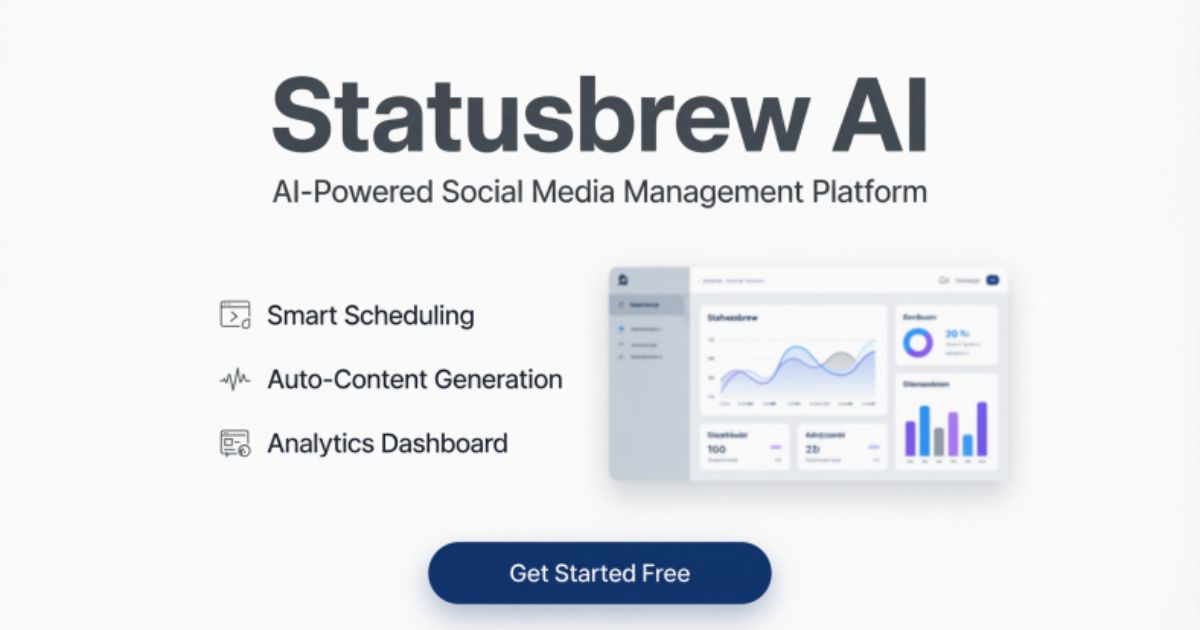
Statusbrew is a social media management tool similar to Hootsuite but with stronger approval workflows. Big names like Papa John’s, Hilton, and Casio use it to manage their social presence daily.
What really sets it apart is the ability to import existing conversion data. Most tools skip this entirely. Statusbrew lets you prove the real business impact of your social media efforts.
Statusbrew Pros And Cons
Pros:
- AI Composer creates captions and hashtags quickly and easily
- Link-in-bio turns Instagram and TikTok bios into clickable grids
- Imports existing reporting and conversion data seamlessly
- Approval workflows make team collaboration smooth and structured
Cons:
- Advanced features carry a noticeable learning curve initially
- Integration setup can demand significant time and configuration effort
Statusbrew Pricing
| Plan | Price | Key Features |
| Lite | $69/month | 1 user, 5 profiles, bulk scheduling |
| Standard | $129/month | 3 users, 10 profiles, 18-month data backfill |
| Premium | $229/month | 6 users, AI sentiment, competitor benchmarking |
| Enterprise | Custom | Unlimited users, HubSpot, Salesforce, SSO |
Statusbrew’s Lite plan is a solid entry point. As your team grows, upgrading unlocks powerful features like AI sentiment analysis and competitor benchmarking that genuinely sharpen your strategy.
Statusbrew Reviews
Statusbrew leads the pack with an outstanding 4.9 out of 5 stars on G2 from over 700 reviews. That near-perfect score reflects how consistently it delivers for social media teams and agencies.
Capterra users give it 4.8 stars across 86 reviews. Users frequently highlight the approval workflows and conversion data importing as features that competitors simply haven’t matched yet.
7. Sprout Social
Sprout Social is the premium operating system for running a full-scale social media operation. Eventbrite, Square, and Canva all rely on it to manage their complex cross-platform social strategies daily.
It’s built for enterprise teams that need everything in one centralized place. The dashboards are intuitive enough that new team members get up to speed fast without lengthy onboarding sessions.
Sprout Social Pros And Cons
Pros:
- Purpose-built for enterprise companies with high-volume posting needs
- Handles massive numbers of accounts across large marketing agencies
- Clean intuitive dashboards reduce the learning curve significantly
- AI Assist suggests content improvements directly within the platform
Cons:
- Pricing makes it inaccessible for most small business budgets
- Client review and approval features feel somewhat limited currently
Sprout Social Pricing
| Plan | Price | Key Features |
| Essentials | $79/seat/month | Post scheduler, optimal send times, image editor |
| Standard | $199/seat/month | Unified inbox, keyword monitoring, case management |
| Professional | $299/seat/month | Unlimited profiles, AI Assist, digital asset library |
| Advanced | $399/seat/month | Sentiment analysis, helpdesk integrations, spike alerts |
Sprout Social is the most premium tool on this list. The per-seat pricing adds up fast for large teams but the depth of features justifies the investment for serious enterprise operations.
Sprout Social Reviews
Sprout Social earns a strong 4.4 out of 5 stars on G2 from over 5,700 reviews. That volume of feedback from real users speaks to how widely adopted and trusted the platform truly is.
Capterra users also rate it 4.4 stars across 602 reviews. Enterprise marketing teams consistently praise the unified inbox and AI-powered content suggestions as their favorite everyday productivity features.
8. Planable
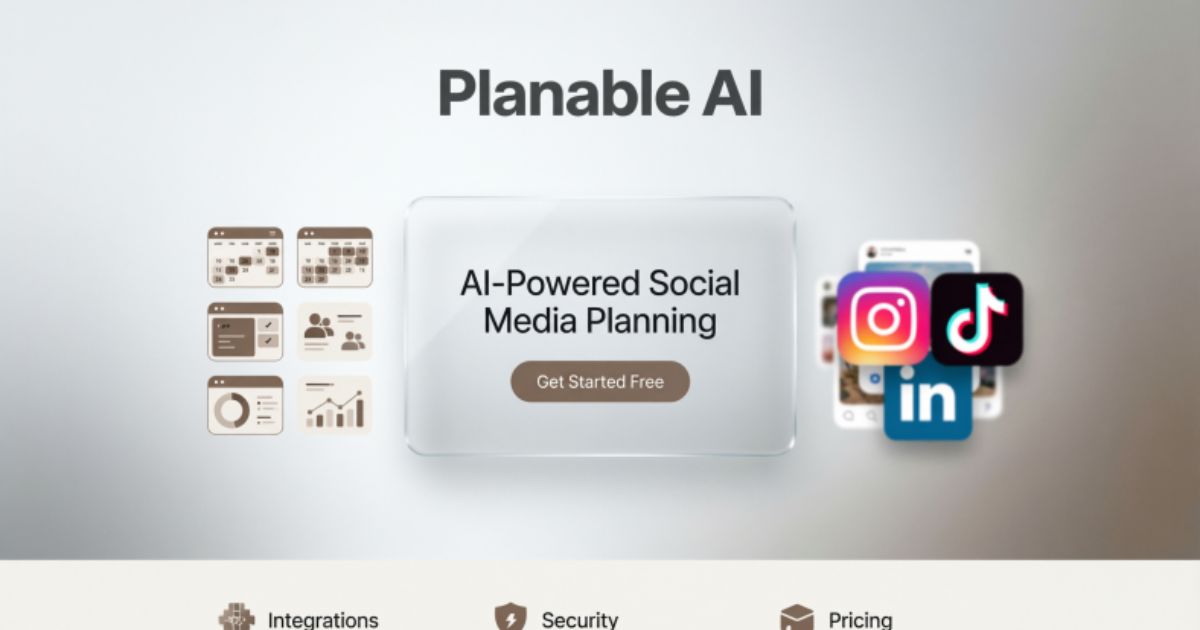
Planable feels like Miro and Buffer combined into one clean platform. Built by the SE Ranking team, it’s designed specifically for freelancers and small social media agencies just finding their footing.
It covers everything from content calendars to performance analytics without overwhelming you. For service-based businesses that don’t need enterprise complexity, Planable delivers exactly what you need affordably.
Planable Pros And Cons
Pros:
- All-in-one solution without the intimidating enterprise price tag
- Integrates with Google Business Profile and Pinterest beyond typical platforms
- Simple intuitive interface keeps the learning curve refreshingly minimal
- Great starting tool for agencies building their first client workflow
Cons:
- Post scheduling customization feels basic for advanced content strategies
- Performance can slow down with large content calendars or many accounts
Planable Pricing
| Plan | Price | Key Features |
| Free | $0/month | 50 total posts, unlimited experience |
| Basic | $39/workspace/month | 60 posts, 4 social pages, approval workflows |
| Pro | $59/workspace/month | 150 posts, 10 social pages, grid view |
| Enterprise | Custom | Unlimited posts, SSO, dedicated account manager |
Planable’s free plan gives you 50 posts to test everything properly. Upgrading to Basic at $39 monthly unlocks unlimited users and approval workflows making team collaboration genuinely straightforward.
Planable Reviews
Planable earns an impressive 4.6 out of 5 stars on G2 from nearly 1,000 reviews. Users love how quickly they can onboard clients and get content approved without confusing back-and-forth email chains.
Capterra rates it 4.5 stars across 323 reviews. Freelancers specifically highlight how much time Planable saves them weekly by consolidating scheduling, collaboration, and client approvals into one simple workspace.
Can Automation Tools Improve Engagement
Automation tools absolutely can improve engagement but not in the way most people expect. They don’t make mediocre content perform well. What they do is free up your time for creative work that actually resonates.
Think of automation as clearing the runway so your best ideas can take flight. Handle scheduling, monitoring, and reporting automatically. Then spend that saved time crafting stories and conversations your audience genuinely wants to engage with.
FAQs
What is social media automation and how does it work?
Social media automation uses AI-powered tools to schedule posts, monitor mentions, and manage multiple accounts automatically without doing everything manually yourself.
Which social media automation tool is best for beginners?
Buffer and Planable are perfect starting points. Both offer free plans, simple interfaces, and enough features to build a solid automation workflow immediately.
Can social media automation tools save me real time daily?
Absolutely. Instead of logging into every platform separately, automation tools handle scheduling, reporting, and monitoring in minutes rather than burning hours unnecessarily.
Is social media automation safe for my brand accounts?
Yes. Reputable tools like Hootsuite, Sprout Social, and Buffer use secure connections. Always choose established platforms with strong user reviews and proven track records.
How much does social media automation typically cost monthly?
Prices range from completely free to several hundred dollars monthly. Buffer starts at $6 per channel while Sprout Social reaches $399 per seat.
Conclusion
Social media automation isn’t a luxury anymore. It’s a necessity. The right tool transforms how you work daily. Whether you’re a freelancer or running a full agency, social media automation saves time, reduces stress, and multiplies your output significantly.
Choosing from the 8 best social media automation tools I’m using in 2026 depends entirely on your needs and budget. Start small and scale up. Let social media automation handle the repetitive tasks. Focus your energy on creativity instead. The marketers winning right now aren’t working harder. They’re working smarter with social media automation driving everything behind the scenes.