
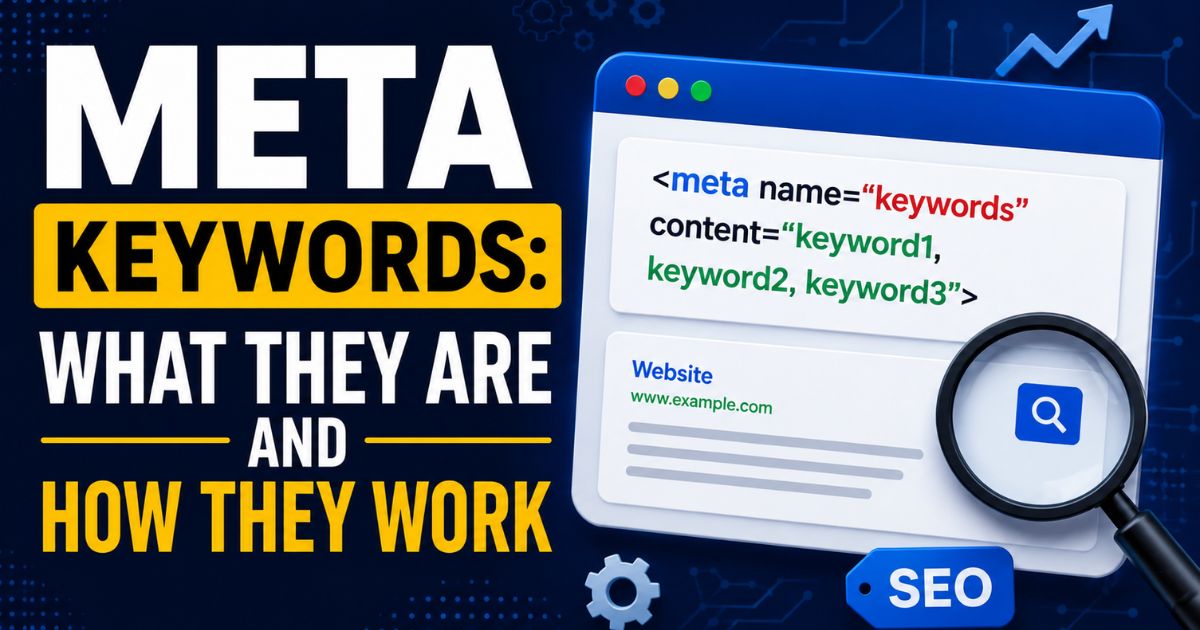
Meta keywords are small but mighty. They live inside your webpage’s HTML code. You won’t see them on the page itself. But search engines sure do notice them. Meta keywords tell search engines exactly what your page is about. Think of them as a secret label stitched into your content.
Using meta keywords the right way still matters today. Yes, Google reduced their weight in rankings. However, other search engines like Bing still read meta keywords closely. Your competitors are already using them. So you should too. Smart meta keywords help you target the right audience. They sharpen your content focus. They attract visitors who actually want what you offer. Meta keywords are a simple tool with real value.
Why Should I Use Meta Keywords?
Here’s the honest truth. Google reduced meta keywords’ weight years ago. Keyword stuffing ruined it for everyone. Site owners crammed irrelevant terms into their code just to rank higher. Google caught on fast. However, meta keywords aren’t completely dead. Bing and several other search engines still factor them into rankings. If you run paid campaigns on those platforms, you want every advantage possible. Skipping meta keywords means leaving easy wins behind.
Nearly 70% of search engine marketers use meta keywords consistently. That stat alone should grab your attention. Even if their direct ranking impact is debatable, building a meta keyword list sharpens your entire content strategy. It forces you to think clearly about what your page truly offers. It helps you stay laser-focused on your target audience. A well-crafted meta keyword list isn’t just an SEO tool. It’s a content compass.
Learn more:The Latest AI News We Announced in May 2026
Incorporating Meta Keywords In Your Content
Adding meta keywords to your content isn’t complicated at all. Start by picking terms that genuinely match your page’s topic. Relevance is everything here. If your page sells gardening tools, don’t stuff it with tech keywords just because they trend. That approach backfires fast. Stick to no more than 10 meta keywords per page. Quality beats quantity every single time. Each keyword should reflect exactly what a real person might type into a search bar.
There are several proven techniques for building a strong meta keyword list. Think about common misspellings of your main terms. Searchers make typos all the time so including those variations is genuinely smart. Long-tail keywords are another goldmine. Also, check your analytics regularly. Real search terms that already bring visitors to your site are your most valuable inspiration.
| Meta Keyword Type | Example | Why It Helps |
| Short-tail keyword | spatula | Broad reach and high volume |
| Long-tail keyword | best non-stick spatula for beginners | Highly targeted traffic |
| Common misspelling | spachula | Captures typo-based searches |
| Plural variation | spatulas | Covers multiple search forms |
FAQ’S
What exactly are meta keywords?
Meta keywords are hidden HTML tags inside your webpage’s code. They tell search engines what your page is about without appearing on the visible page.
Do meta keywords still matter for SEO?
Yes they still matter. Google reduced their weight but Bing and other search engines still read meta keywords. Smart marketers never ignore them completely.
How many meta keywords should I use?
Keep it simple. Use no more than 10 meta keywords per page. Relevance always beats quantity so choose terms that truly match your content.
Can meta keywords hurt my website rankings?
Stuffing irrelevant meta keywords into your code can damage your credibility. Always choose accurate relevant terms that genuinely reflect what your page offers visitors.
Where do meta keywords appear on a webpage?
Meta keywords live inside your webpage’s HTML source code. Regular visitors never see them but search engines scan them quickly to understand your page’s topic.
Conclusion
Meta keywords are still worth your attention. This guide on Meta Keywords: What They Are and How They Work proves that. Meta keywords help search engines understand your content fast. They connect you to the right audience. Don’t overlook them just because Google reduced their weight.
Use meta keywords wisely and consistently. Keep them relevant to your page. Limit them to 10 per page. Other search engines like Bing still value meta keywords strongly. Your competitors already use meta keywords daily. So stay ahead. A solid meta keywords strategy sharpens your SEO efforts and drives real targeted traffic to your site.