

Agentic AI tools are changing the way people work in 2026. These tools don’t just answer questions. They actually get things done. The best agentic AI tools can research, plan, and execute tasks on your behalf. That’s a huge deal for anyone trying to save time and work smarter.
After testing dozens of agentic AI tools over the past year, the right ones genuinely cut workload by a third. Some agentic AI tools are free. Others cost a little. But all eight on this list deliver real, measurable results. Whether you’re a total beginner or a seasoned tech professional, there’s an agentic AI tool here built for you. Let’s break them all down, one by one.
What Is An Agentic AI Tool?
An agentic AI tool is software that thinks, plans, and acts on your behalf. You give it a goal. It figures out the steps. Unlike rigid automation tools, agentic AI tools make real decisions. They adapt when circumstances shift. Think of them as digital team members that don’t wait around for instructions. They work independently, handle complexity, and get things done without constant supervision.
These tools combine large language models with real-world app integrations. That means they can access your data, connect to your existing software, and execute tasks end to end. The best agentic AI tools don’t just follow rules. They reason through problems. Whether you’re running a business, managing a team, or working solo, these tools handle the repetitive and complex work so you don’t have to.
How Does An Agentic AI Tool Work?
Agentic AI tools start with a goal you give them. From there, they break that goal into smaller steps and figure out which tools or integrations they need. Each step gets executed in sequence. If something fails or the context changes, the agent adjusts its approach. It doesn’t freeze up. It finds another path. That adaptability is what separates agentic AI from standard rule-based automation.
Most platforms give you a visual canvas to build these workflows. You drag apps onto it and connect them through logic. Some tools go even further. Just describe what you want in plain language and the AI builds the workflow for you. Once it’s running, the agent handles everything autonomously. No babysitting needed. That’s the real power of agentic AI tools in 2026.
8 Best Agentic AI Tools And Platforms In 2026
The agentic AI market is packed with options right now. Dozens of platforms claim to save you time and automate your workflow. But only a handful actually deliver on that promise. After extensive testing, eight tools consistently rise above the rest. They cover every skill level and use case, from beginner-friendly no-code builders to enterprise-grade multi-agent platforms. Each one earns its spot on this list.
Here’s the lineup: Gumloop, Claude, n8n, Relay.app, Cursor, Zapier, CrewAI, and StackAI. Some are free to start. Others require a modest monthly investment. A few are built for solo operators and others scale to Fortune 500 companies. The right agentic AI tool depends on what you’re trying to accomplish. Read through each one carefully. Your perfect match is almost certainly in this list.
1. Gumloop
Gumloop is a standout agentic AI platform built for anyone who wants results without a steep learning curve. It combines natural language agent building with built-in LLM access and MCP server integrations. You don’t need coding skills. You don’t need separate API subscriptions. Just describe what you want and the platform builds it. Freelancers, agencies, and enterprise companies all use it. That’s a rare and powerful combination.
What makes Gumloop genuinely impressive is its flexibility. It works for simple tasks and scales up to complex multi-agent systems. Big companies like Shopify, Instacart, and Webflow trust it across their teams. The platform has a generous free plan so you can test it without spending a dime. If you’re looking for the best starting point in the agentic AI space, Gumloop consistently delivers.
How Gumloop Works
Gumloop gives you two main features: Flows and Agents. Flows are visual, drag-and-drop workflows. You connect apps and set logic between them. The built-in AI assistant, Gummie, can even build these flows for you. Just tell it what you need in plain English. It handles the setup. Flows work great for predictable, repeatable tasks that follow a fixed process from start to finish.
Agents are even simpler to set up. Give the agent access to your tools, pick an AI model, and write a few instructions. Then just chat with it. Tell it to update blog posts, pull reports, or organize files. It figures out the approach on its own. Even better, you can connect Gumloop to Slack. Tag the agent in a message and it gets to work instantly.
Who Is Gumloop For?
Gumloop suits a surprisingly wide range of users. Freelancers use it to automate repetitive work. Agency owners use it to scale delivery without adding headcount. Marketing teams love it for content workflows. Sales teams use it for outreach automation. Customer service teams build intelligent support agents with it. Beginners feel comfortable from day one. Experienced builders can push it to its technical limits too.
Enterprise companies also rely on Gumloop at scale. Shopify, Instacart, and Webflow are among its notable users. The platform supports role-based access control, unified billing, and multi-workspace management so it grows with your organization. Whether you’re automating a single task or orchestrating dozens of agents across departments, Gumloop handles it. There aren’t many agentic AI tools that serve this full a range of users.
Gumloop Pricing
Gumloop’s pricing is straightforward and one of the most competitive in the agentic AI space. There’s a free plan that covers the basics without asking for a credit card. Paid plans unlock more credits, additional seats, and advanced features like webhooks and concurrent runs. Here’s a clear breakdown of each plan so you can decide which one fits your needs.
| Plan | Price | Credits/Month | Seats | Key Features |
| Free | $0/month | 2,000 | 1 | Gummie Agent, unlimited flows, 1 active trigger |
| Solo | $37/month | 10,000+ | 1 | Unlimited triggers, webhooks, email support |
| Team | $244/month | 60,000+ | 10 | Unified billing, analytics, dedicated Slack support |
| Enterprise | Custom | Custom | Custom | SAML, audit logs, VPC, admin dashboard |
The free plan is genuinely usable, not just a teaser. You get Gummie, unlimited flows, and 2,000 monthly credits. That’s enough to build and test your first agents. The Solo plan at $37 per month is excellent value and removes most restrictions without breaking the bank. Larger teams will find the $244 Team plan covers everything they need to collaborate and scale effectively across the organization.
Gumloop Pros And Cons
Gumloop has some real strengths worth highlighting. Building agents feels as easy as having a conversation. Built-in LLM access means no separate API subscriptions to manage. The free plan is generous and lets you explore the platform without any financial commitment. MCP server support broadens the integration possibilities considerably. And the pricing, especially at the Solo tier, is competitive compared to nearly every other agentic AI platform out there.
The platform does have a few rough edges. The template library isn’t as extensive as competitors like n8n or Zapier. Managing multiple workspaces can feel confusing at first. Some users take a little time to understand how Flows and Agents differ. However these are minor growing pains. Gumloop improves quickly and the core experience is excellent. For most users, the advantages clearly outweigh the drawbacks.
Gumloop Reviews And Ratings
User sentiment around Gumloop is overwhelmingly positive. On Product Hunt, it holds a perfect 5 out of 5 rating from verified user reviews. Early adopters consistently praise how intuitive the platform feels. They highlight the speed at which you can go from concept to live agent. The natural language building experience earns particular mention across reviews as a genuine differentiator from other tools in this category.
There’s An AI For That also gives Gumloop a 5 out of 5 rating. The consensus among users is clear: the platform delivers on its promises. Reviewers appreciate the built-in LLM access and the active development pace. New features ship regularly. If you’re on the fence, just browse the reviews yourself. Real users across industries consistently report that Gumloop saves them meaningful time each week.
2. Claude

Claude is the AI model behind some of the most powerful agentic workflows in use today. Built by Anthropic, it’s designed specifically with business use cases in mind. It writes code, conducts web research, analyzes data, and drafts complex documents. The quality of its output regularly surprises first-time users. If you’ve only ever used ChatGPT, switching to Claude for professional work feels like a genuine upgrade.
Beyond being an LLM, Claude functions as a capable agentic AI tool through Claude Projects. You can give it custom instructions, connect it to MCP servers, and build semi-automated workflows inside the chat interface. Pair it with a platform like Gumloop and you unlock a genuinely powerful combination. Claude handles the reasoning. The platform handles the execution. Together, they cover almost any business workflow imaginable.
How Claude Works
At its core, Claude is a large language model. But its agentic capabilities come alive through Claude Projects. You create a project, add a detailed system prompt, and Claude remembers its instructions across every conversation within that project. For example, you can build a content optimization agent by giving Claude the expertise of an SEO professional. Every new chat in that project picks up exactly where the last one left off.
Claude also supports MCP server connections. That means it can reach out to external tools and take actions in real time. It can fetch your sitemap, identify underperforming pages, and generate specific recommendations. With web search enabled, it pulls current data directly from the internet. The more context you give it, the better it performs. Claude genuinely gets smarter the more thoughtfully you build around it.
Who Is Claude For?
Claude is built for anyone who uses AI at work. That covers a wide range of people. Writers use it to draft and polish content. Developers use it to write and debug code. Analysts use it to summarize data and research findings. Marketers use it for SEO, outreach, and campaign strategy. If your work involves thinking, writing, or researching, Claude can take a meaningful chunk of that load off you.
Beginners find Claude easy to pick up immediately. There’s no complex setup. Just open a chat and start working. As your confidence grows, you can explore Projects, connect MCP servers, and build more sophisticated agentic workflows. Advanced users combine Claude with platforms like Gumloop or n8n for full automation pipelines. It scales naturally from casual daily use all the way up to enterprise-level workflow automation.
Claude Pricing
Claude offers a clear and accessible pricing structure. The free plan covers everyday use for most people. The Pro plan unlocks more powerful models, file creation, extended thinking, and MCP connectors. The Max plan suits power users who regularly hit usage limits. Here’s how the plans break down so you can pick the right tier for your workflow.
| Plan | Price | Key Features |
| Free | $0/month | Web, iOS, Android, desktop access, code generation, web search, image analysis |
| Pro | $17/month (annual) or $20/month | More usage, Claude Code, file creation, Projects, Research, Google Workspace, MCP |
| Max | From $100/month | 5x–20x usage, memory across conversations, priority access, Claude in Excel |
The free plan is a solid starting point. It includes web search, image analysis, and content generation. Most casual users won’t need more than this. However if you’re using Claude for serious professional work, the Pro plan at $17 per month billed annually is genuinely good value. It unlocks more capable models and MCP integrations that transform Claude into a true agentic AI tool.
Claude Pros And Cons
Claude has a lot going for it. The quality of its reasoning and writing is best in class for business tasks. Claude Projects make it easy to build semi-automated, instruction-driven workflows. Web search keeps it grounded in current information. MCP server support extends its reach into your existing tech stack. And the free tier gives anyone the chance to experience its capabilities before committing to a paid plan.
There are trade-offs worth keeping in mind. Claude is primarily an LLM, not a dedicated agent builder. For complex multi-step automation, you’ll want to pair it with a platform like Gumloop or n8n. Heavy daily users also bump into usage limits on the Pro plan. Upgrading to Max solves that but at a significantly higher price. Still, for the quality it delivers, Claude represents excellent value overall.
Claude Reviews And Ratings
Claude earns consistently strong ratings across review platforms. On G2, it holds a 4.4 out of 5 rating based on over 88 user reviews. Reviewers frequently praise the quality of its writing and its ability to handle complex professional tasks. Many users specifically mention that it outperforms other AI assistants for business-focused work. The reasoning depth it brings to difficult tasks stands out across multiple independent reviews.
On Capterra, Claude holds a 4.6 out of 5 rating from verified users. Business professionals across industries give it high marks for productivity impact. Common praise focuses on its ability to write naturally, handle nuanced instructions, and maintain context over long conversations. Some users note usage limits as a frustration on the free plan but overwhelmingly recommend upgrading to Pro for any serious professional use.
3. N8n

N8n is a powerful agentic workflow builder designed for technical teams. It gives developers and IT professionals full control over their automation pipelines. The platform supports a huge library of integrations and works with any LLM through API key connections. For teams that prioritize customization, transparency, and security, n8n is a genuinely compelling choice. It’s open source, self-hostable, and battle-tested across thousands of production environments worldwide.
The platform has built a loyal community over recent years. A wave of YouTubers and technical bloggers have published tutorials, templates, and guides around it. That means there’s no shortage of resources to help you get started or solve problems along the way. If you’re a developer looking for an agentic AI platform that gives you complete visibility into every workflow step, n8n is worth exploring seriously.
How N8n Works
N8n gives you a visual canvas where you build automated workflows by dragging nodes onto the screen. Each node represents an app or action. You connect them with logic and set conditions for how data flows between them. You can also add LLM models to any point in the workflow. Just bring your own API key for whichever model you prefer to use in your setup.
Once your workflow is built, you can turn it into an AI agent with added flexibility. The agent can make decisions, call external tools, and adapt based on context rather than following a rigid sequence. N8n also has a growing template library. Many users start with a pre-built template and customize from there. That shortcut saves considerable setup time, especially for common business workflow patterns.
Who Is N8n For?
N8n is built for technical teams. Developers feel at home here immediately. IT operations professionals use it for security monitoring and system integrations. DevOps teams rely on it for pipeline automation. If you already understand how APIs work and you want a no-code interface to connect them visually, n8n fits like a glove. The platform rewards those who bring existing technical knowledge to the table.
Security-conscious teams also gravitate toward n8n because of its self-hosting option. You can run the entire platform on your own servers. No cloud dependency. No data leaving your infrastructure. That’s a significant advantage for companies in regulated industries. Some non-technical teams use n8n successfully but typically need a developer to set things up first. Once built, workflows run reliably with minimal ongoing maintenance required.
N8n Pricing
N8n offers multiple pricing tiers starting with a free trial and scaling up to enterprise. Hosted plans are available for most users while self-hosted options suit teams with strict data compliance requirements. Pricing steps up based on execution volume and the number of active projects. Here’s a clear overview of what each plan includes so you can find the right fit for your team.
| Plan | Price | Executions/Month | Key Features |
| Starter | $24/month | 2,500 | Unlimited steps, 1 project, 5 concurrent executions |
| Pro | $60/month | 10,000 | 3 projects, 20 concurrent executions, workflow history |
| Business | $800/month | 40,000 | SSO, SAML, Git version control (self-hosted) |
| Enterprise | Custom | Custom | 365-day logs, dedicated support, external secret store |
The Starter plan at $24 per month is a reasonable entry point for small teams. It covers the basics and allows unlimited workflow steps. As your volume grows, the Pro plan at $60 per month handles most mid-sized team needs comfortably. The Business and Enterprise tiers are priced for larger organizations with compliance demands. Keep in mind that LLM API costs are separate when you use AI-powered nodes.
N8n Pros And Cons
N8n shines in several key areas. The template library is extensive. Finding a starting point for almost any workflow is usually quick. The integration library is equally impressive and supports hundreds of apps with any LLM through API keys. The self-hosting option is a genuine differentiator. No other tool on this list makes it as straightforward to run your entire automation stack on your own infrastructure securely.
The downsides are real though. N8n has a noticeable learning curve. First-time users without a technical background often feel overwhelmed. The interface can feel dense and unintuitive compared to tools like Gumloop or Relay.app. AI-heavy workflows also get expensive fast since you pay separately for LLM usage. If you want simplicity, look elsewhere. But if technical depth is your priority, n8n delivers it consistently.
N8n Reviews And Ratings
N8n earns some of the highest user ratings in the agentic AI tool space. On G2, it holds an impressive 4.8 out of 5 rating based on over 195 reviews. Users consistently praise the platform’s flexibility, integration depth, and the reliability of workflows once they’re built. Developers in particular highlight how customizable the platform is compared to alternatives like Zapier or Make for complex technical use cases.
On Capterra, n8n holds a 4.6 out of 5 rating from 41 verified reviews. Reviewers appreciate the self-hosting capability and the active open-source community around the platform. Common feedback includes praise for the template library and the pace of new feature releases. Some users mention the initial setup complexity as a barrier but note that the long-term payoff is well worth the effort invested.
4. Relay.App
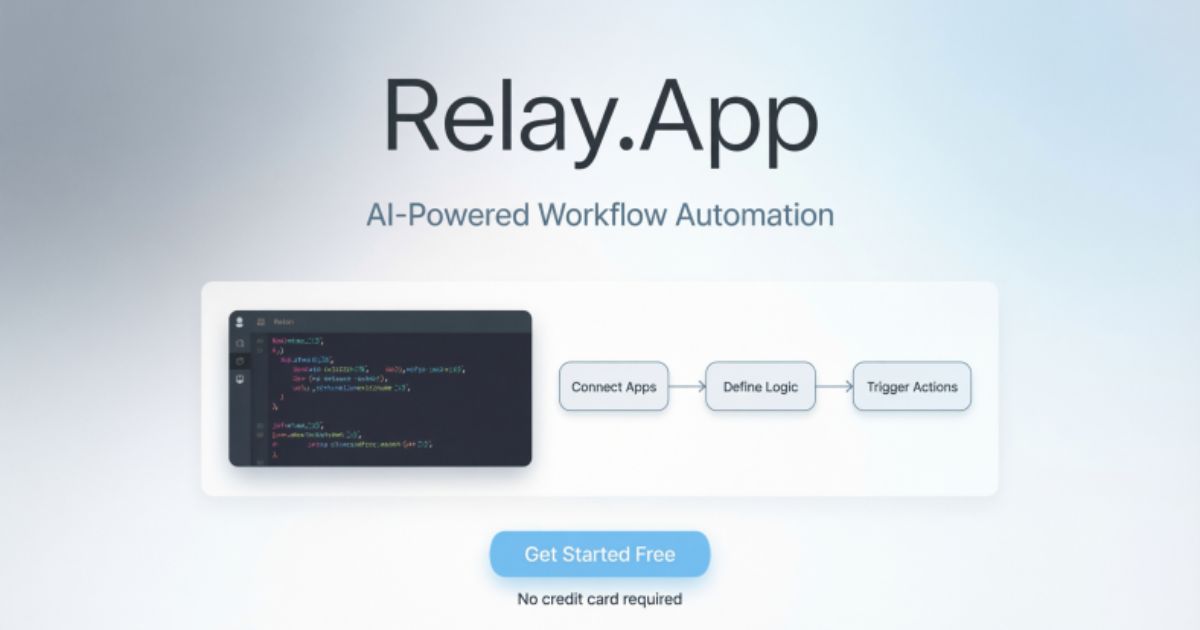
Relay.app is the most beginner-friendly agentic AI tool on this list. It keeps things simple. The interface is clean, the setup is fast, and the learning curve is almost flat. If you’ve been wanting to automate parts of your day but felt intimidated by other platforms, Relay.app is the perfect entry point. It handles day-to-day tasks like meeting follow-ups, social posts, and support summaries beautifully.
The platform doesn’t try to be everything to everyone. That’s actually a strength. It focuses on doing simple things extremely well. You get multi-step workflows, AI model access for Claude, GPT, and Gemini, and a clean natural language builder. The free plan is one of the most generous in this category. For freelancers and small teams just getting started with automation, Relay.app is an easy and confident recommendation.
How Relay.App Works
Relay.app works through a visual no-code canvas. You drag apps onto the workspace and connect them through triggers and actions. The interface feels lighter and cleaner than most competitors. Recently the platform added natural language workflow building. Describe what you want and the AI sets it up for you. That addition makes it even more accessible for users who don’t want to build workflows manually from scratch.
The platform integrates with popular tools right out of the box. Think Gmail, Slack, Notion, Linear, and more. You can layer AI models like Claude or GPT into your workflows to generate content, summarize information, or make decisions along the way. The logic stays simple and readable. Unlike more complex platforms, Relay.app keeps its workflow builder intuitive at every step. What you see is genuinely what you get.
Learn more:Top 10 Best Zapier Alternatives I’Ve Tested In 2026
Who Is Relay.App For?
Relay.app suits beginners and solo operators best. If you’re just discovering the world of workflow automation, this is a great starting point. Freelancers use it to automate client communications. Startup founders use it to streamline operations without hiring additional staff. Sales professionals use it for outreach sequences and meeting preparation. The platform removes all unnecessary complexity so you can focus on building workflows that actually save you meaningful time.
Small teams also find strong value in Relay.app. The Team plan supports up to ten users and includes shared workflows and connections. It’s well suited to teams running simple, repeatable processes that need a bit of AI intelligence layered in. However if your workflows are complex and multi-step with advanced logic requirements, you’ll likely outgrow Relay.app and need something like Gumloop or n8n instead.
Relay.App Pricing
Relay.app offers one of the most accessible pricing structures in this category. The free plan is genuinely capable. Paid plans are affordable and scale reasonably as your needs grow. Each tier increases your monthly AI credits and the number of workflow steps you can run. Here’s a full breakdown to help you decide which plan makes the most sense for your situation and budget.
| Plan | Price | Steps/Month | AI Credits | Users |
| Free | $0/month | 200 | 500 | 1 |
| Professional | $38/month | 750 | 5,000 | 1 |
| Team | $138/month | 2,000 | 5,000 | 10 included |
| Enterprise | Custom | Custom | Custom | Custom |
The free plan includes access to Claude, GPT, and Gemini without extra subscriptions. That’s a solid deal for anyone just starting out. The Professional plan at $38 per month works well for solo operators who run automations daily. Stepping up to the Team plan at $138 per month unlocks shared workflows and connections across up to ten users. Enterprise pricing is available for larger organizations on request.
Relay.App Pros And Cons
Relay.app does several things exceptionally well. The interface is genuinely one of the cleanest in this space. Getting your first workflow running takes minutes, not hours. The built-in AI credits remove the need for separate LLM subscriptions on basic plans. And the price point is hard to argue with, especially on the free tier. For beginners who want quick results without a steep learning curve, it’s excellent.
The limitations become apparent as your needs grow. Relay.app is an AI workflow builder more than a true agentic AI platform. It doesn’t handle complex multi-agent orchestration well. The step limits on lower plans feel restrictive for heavy users. The integration library, while solid, isn’t as extensive as Zapier or n8n. It’s the perfect tool to start with but may not be the tool you ultimately stay with.
Relay.App Reviews And Ratings
Relay.app earns exceptional user satisfaction scores. On G2, it holds a 4.9 out of 5 rating from over 71 verified user reviews. That’s among the highest scores of any tool in this category. Users consistently highlight the clean interface, fast setup experience, and quality of customer support as standout features. The overall sentiment suggests users feel the platform genuinely delivers on everything it promises from day one.
On Capterra, Relay.app holds a perfect 5 out of 5 from its current reviews. While the review volume is smaller than some competitors, the consistency of positive feedback is notable. Users appreciate how quickly they move from setup to real results. Several reviewers mention they tried other platforms first and switched to Relay.app for its simplicity. First-time automation users in particular give it especially enthusiastic and detailed endorsements.
5. Cursor

Cursor is an AI-powered code editor that doubles as a surprisingly capable agentic AI platform. Most people know it as a tool for writing and debugging code faster. But its real power goes deeper. Cursor can take instructions from markdown files you create, reason through complex tasks, and execute them using natural language commands. It’s one of the fastest-growing software products on the market for good reason.
Developers naturally love Cursor. But marketers and non-technical professionals are discovering it too. The platform supports multiple AI models including Claude, Gemini, and ChatGPT. That model-agnostic flexibility means you’re never locked into one provider. With MCP server support and the ability to write custom logic on top of your agents, Cursor gives technically inclined users a level of control that no-code platforms simply can’t match.
How Cursor Works
Cursor starts as an installable desktop application. Once you install it and grant folder access, you can create markdown files that serve as instruction sets for your agents. Think of these files as your agent’s brain. They tell it who it is, how to behave, and what context to work with. You create these files using plain language. Claude, ChatGPT, or Cursor itself can help you write them quickly.
From there, you chat with Cursor in natural language. Tell it what you want to accomplish. It reads your markdown instructions, reasons through the task, and takes action. You can also connect MCP servers to extend what it can do. Cursor walks you through what it needs and explains its reasoning as it works. That transparency makes it especially valuable for users who want full visibility into every step.
Who Is Cursor For?
Cursor is built for developers first. Software engineers use it to write code faster, catch bugs, and navigate large codebases with ease. The AI suggestions and agent capabilities save hours of tedious work each week. If you spend your days writing code, Cursor is arguably the most productive tool available right now. Many developers describe it as the single biggest workflow upgrade they’ve made in years.
However Cursor isn’t exclusively for developers anymore. Marketers, analysts, and operations professionals who are comfortable with a bit of technical experimentation find a lot of value in it. YouTube tutorials have made learning Cursor accessible for curious non-coders. If you want the flexibility to build truly custom agentic AI workflows and you’re willing to climb a moderate learning curve, Cursor rewards that investment very generously.
Cursor Pricing
Cursor keeps its pricing competitive across a range of plans. There’s a free Hobby tier to get started and a Pro plan at $20 per month for serious users. Higher tiers unlock more usage and access to advanced models. Teams get centralized billing and admin controls. Here’s a complete breakdown of what each plan includes so you can choose the right one for your needs.
| Plan | Price | Key Features |
| Hobby | $0/month | One-week Pro trial, limited agent requests, limited tab completions |
| Pro | $20/month | Extended limits, unlimited tab completions, background agents |
| Pro+ | $60/month | Everything in Pro plus 3x usage across OpenAI, Claude, and Gemini |
| Ultra | $200/month | Everything in Pro plus 20x model usage and priority feature access |
| Teams | $40/user/month | Shared chats, centralized billing, SAML/OIDC SSO, usage analytics |
The Pro plan at $20 per month hits a sweet spot for most individual users. It removes the major limitations of the free tier and unlocks background agents. Heavy users who need more model capacity will want to look at Pro+ or Ultra. Teams pricing at $40 per user per month includes admin controls and organization-wide privacy mode, making it suitable for small to mid-sized development teams.
Cursor Pros And Cons
Cursor’s biggest strength is its flexibility. You can build almost anything with it. The model-agnostic design means you work with whichever LLM performs best for your use case. MCP server support extends it further. The markdown-based instruction system is intuitive once you understand it. And for developers specifically, the coding assistance is genuinely world-class. It speeds up everything from writing new features to refactoring legacy code significantly.
The downsides are real. Cursor isn’t beginner friendly. Getting meaningful results requires comfort with technical concepts. Agents built in Cursor also run locally on your machine which limits team collaboration. If you want a cloud-hosted agent your whole team can access easily, other platforms serve that need better. Heavy model usage can also push costs up quickly on higher plans. It’s powerful but demands a committed learning investment upfront.
Cursor Reviews And Ratings
Cursor’s user ratings reflect its strong reputation in developer circles. On G2, it holds a 4.7 out of 5 rating from over 20 verified reviews. Reviewers consistently praise how dramatically it accelerates coding workflows. Many describe it as the tool they didn’t know they needed until they tried it. Developers in particular report significant reductions in time spent on repetitive coding tasks after making the switch to Cursor.
On Gartner, Cursor holds a 4.4 out of 5 rating from over 55 reviews. Enterprise developers and technical leads give it high marks for AI code quality and contextual awareness. Some reviewers note occasional inconsistencies in model suggestions for very complex codebases. Overall though, the consensus is overwhelmingly positive. For development-focused agentic AI work, Cursor is consistently ranked among the very best tools available today.
6. Zapier
Zapier is the original automation platform. It’s been connecting apps and automating workflows for over a decade. Most people already know what it does. But in 2026, Zapier has evolved considerably. It now layers AI capabilities directly into its existing automation framework. The result is a platform that bridges traditional if-this-then-that logic with more flexible agentic-style decision-making. It’s a familiar tool that has grown considerably more powerful.
The platform’s greatest asset is its integration library. Zapier connects with thousands of apps. Chances are every tool you currently use is already supported. That ecosystem depth gives it a practical advantage for teams that don’t want to rebuild their tech stack from scratch. If you’re already a Zapier user and want to incorporate AI into existing workflows, upgrading to its agent features is a very natural next step.
How Zapier Works
Zapier works by connecting apps through a trigger-action framework. You pick a trigger, such as a new email arriving, then define an action like adding a row to a spreadsheet. Multiple steps chain together into complex automation sequences. You can also insert AI steps that generate content, make decisions, or classify data. These AI nodes add a layer of intelligence to otherwise rigid and predictable workflows.
Zapier’s Agent Builder takes things further. Here you can create more flexible automations by giving an agent instructions on how to behave. Unlike traditional Zapier workflows, agents can adapt their approach based on context. They’re not locked into a fixed sequence. You can deploy these agents to work on specific goals and monitor their performance through the Zapier dashboard. It’s a genuine step toward true agentic functionality.
Who Is Zapier For?
Zapier works best for business owners and operations teams already deeply invested in its ecosystem. If you’ve been using Zapier for years and just want to add AI capabilities, sticking with it makes perfect sense. The learning curve for existing users is minimal. You already know how it works. Adding AI steps to existing workflows is straightforward. The massive integration library means almost any business process can be automated within the platform.
For brand-new users specifically seeking an agentic AI tool, there are better entry points available. Zapier’s DNA is rooted in traditional automation and its AI features, while improving, can feel bolted on rather than native. However for companies that have already built substantial workflows in Zapier, rebuilding everything elsewhere isn’t worth it. The practical move is to layer in agent features and expand gradually from your existing foundation.
Zapier Pricing
Zapier uses two separate pricing structures. One covers its core automation platform and another covers its Agents add-on feature. The core platform starts free and scales up based on task volume. The Agents add-on has its own separate tiers. Understanding both before committing to a plan is important. Here’s how the pricing breaks down across all currently available tiers for both products.
| Product | Plan | Price | Key Features |
| Core Automation | Free | $0 | Limited tasks/month |
| Core Automation | Professional | $29.99/month | Unlimited premium apps, custom logic |
| Agents Add-on | Free | $0 | 400 activities/month, web browsing |
| Agents Add-on | Pro | $50/month | 1,500 activities/month |
| Agents Add-on | Enterprise | Custom | Custom activity limits |
The split pricing model adds up quickly if you want both automation and agent capabilities. A serious Zapier user running the Professional core plan plus the Pro Agents add-on spends roughly $80 per month. That’s before any LLM costs for AI-powered steps. For that budget, alternatives like Gumloop offer more native agentic functionality. However if you’re deeply embedded in Zapier’s ecosystem, the added cost may still be justified.
Zapier Pros And Cons
Zapier has clear strengths worth acknowledging. Its integration library is unmatched in breadth. Thousands of apps connect natively without custom configuration. The platform is mature, stable, and extremely well documented. Plenty of online resources exist for troubleshooting and inspiration. For automating established business processes that follow predictable patterns, Zapier is extremely reliable. Teams that have used it for years trust it deeply. That track record matters enormously for mission-critical workflows.
The weaknesses are also worth noting. The AI features feel like additions rather than core design decisions. The agent builder is a separate optional add-on with its own pricing. Traditional Zapier workflows can sometimes break when integrating with complex CMS platforms. And compared to purpose-built agentic AI tools, Zapier lacks the native adaptability that defines true agent behavior. It’s powerful for automation but falls short as a dedicated agentic AI platform.
Zapier Reviews And Ratings
Zapier earns strong ratings given its long tenure in the automation space. On G2, it holds a 4.5 out of 5 rating from an impressive 1,740 verified reviews. That volume of feedback gives its rating genuine credibility. Users praise the integration depth, reliability, and the sheer breadth of workflows it supports. The platform’s stability and long support history give enterprise users particular confidence in building critical workflows on it.
On Capterra, Zapier holds a 4.7 out of 5 rating from over 3,031 user reviews. That’s among the highest review volumes of any automation platform in its category. Users consistently rate it highly for ease of use and integration variety. Some reviewers note that the AI features lag behind dedicated agentic AI tools. But for core automation reliability, Zapier’s reputation across thousands of reviews speaks very clearly for itself.
7. CrewAI
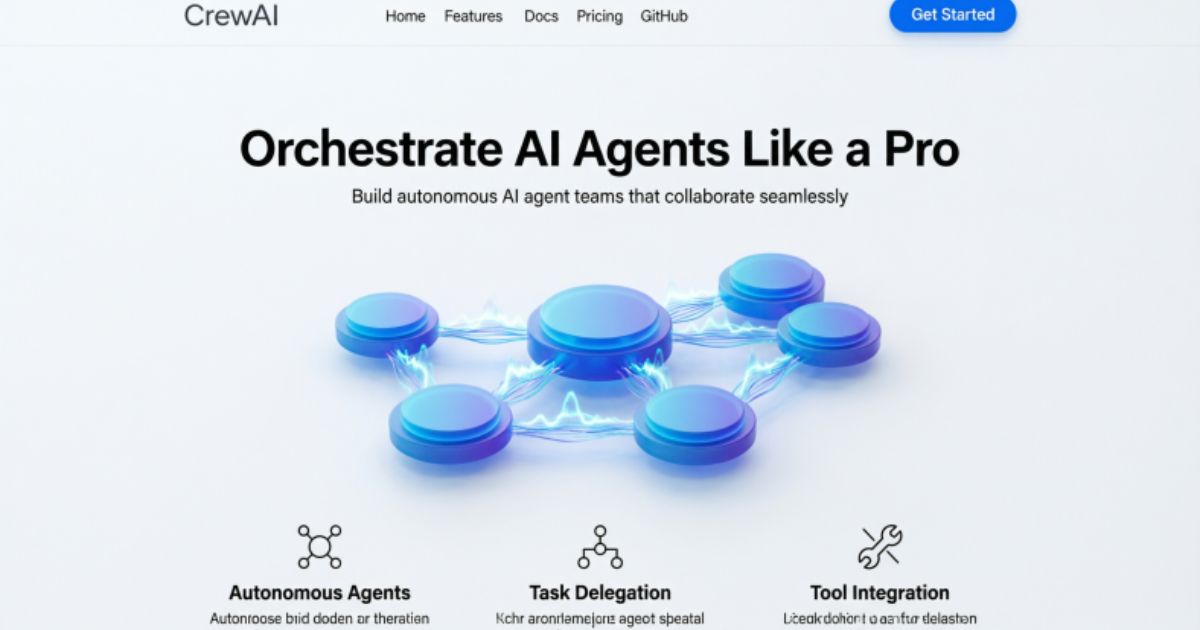
CrewAI is an enterprise-grade multi-agent platform built from the ground up for scale. It’s not designed for solo operators or small teams. It’s built for large organizations that need to deploy, manage, and monitor dozens of AI agents across multiple departments. Companies like Deloitte, Oracle, KPMG, and Accenture use it. That client list alone signals what league CrewAI plays in. It’s a serious platform for serious organizations.
What sets CrewAI apart from other agentic AI tools is its native multi-agent architecture. Teams of agents can work simultaneously on complex tasks. Each agent has a defined role and CrewAI orchestrates their collaboration intelligently. You can monitor agent performance in real time and see where things break. For consulting firms and enterprise operations teams, this level of control and transparency is genuinely transformative at scale.
How CrewAI Works
CrewAI gives you a framework and a visual UI Studio for building your automations. You can code agents from scratch or work from existing templates. Once your crew is configured, you deploy it to production. From there, a clean user interface lets your team interact with the agents directly. The platform handles the orchestration behind the scenes so your team members don’t need to understand the technical architecture to use it.
The tracking and monitoring capabilities are where CrewAI really distinguishes itself. You can watch agents in action in real time. The platform logs every decision, flags failures, and helps you pinpoint exactly where a workflow breaks down. That visibility makes iterating on agent performance much faster than on other platforms. For enterprise teams managing large-scale agentic AI deployments, that observability layer is an essential feature, not just a nice-to-have.
Who Is CrewAI For?
CrewAI is built for enterprise companies. Specifically it suits large organizations running complex, multi-department operations that require coordinated AI agent collaboration. Consulting firms like Deloitte and Accenture use it for scalable client service delivery. Technology companies at Oracle’s scale use it to automate internal processes. If your organization operates at this level and needs a platform purpose-built for multi-agent deployment, CrewAI is worth a serious look.
Smaller teams and solo operators should look elsewhere. CrewAI is genuinely overkill for most use cases. The setup complexity, the sales-driven pricing process, and the enterprise-first design all point to a tool built for large organizations with dedicated AI teams. If you’re a startup or freelancer, Gumloop, Claude, or Relay.app will serve you far better at a fraction of the effort and cost involved.
CrewAI Pricing
CrewAI doesn’t publish pricing on its website. You won’t find a pricing page with monthly tiers laid out clearly. Instead the process involves booking a demo with their sales team. From there you get a custom quote based on your company’s size, use case, and volume requirements. This approach is common for enterprise platforms. If you need a budget estimate upfront, reaching out directly with your requirements is the fastest path forward.
The lack of transparent pricing is a genuine drawback for organizations doing preliminary research. It makes direct comparisons difficult. However platforms at CrewAI’s scale typically price based on custom infrastructure, support SLAs, and deployment complexity. If you’re in the enterprise category they serve, cost is usually justified by the operational value delivered. Smaller teams are better served by platforms with transparent and accessible pricing structures anyway.
CrewAI Pros And Cons
CrewAI has real strengths for the right audience. It’s purpose-built as an agentic AI platform, not retrofitted from automation software. The multi-agent architecture handles complex task coordination natively. Performance tracking and agent monitoring tools are best in class. Connections to enterprise tools like Box, HubSpot, and AWS work reliably. And the fact that Deloitte, Oracle, and KPMG trust it speaks volumes about its enterprise-grade reliability and security posture.
The cons are equally clear. Pricing is opaque. You can’t self-serve your way in. Getting started requires a sales call which adds friction for teams moving quickly. The platform is complex by design and demands significant technical resources to set up and configure. For organizations that don’t need enterprise-scale multi-agent systems, it’s simply more than necessary. Smaller teams almost always find better value in simpler agentic AI tools elsewhere.
CrewAI Reviews And Ratings
CrewAI has a limited but largely positive review footprint online. On G2, it holds a 4.5 out of 5 rating from a small number of verified reviews. Users who review the platform praise its architectural depth and the quality of its multi-agent coordination. Enterprise professionals specifically highlight how well it handles complex parallel agent workflows that simpler platforms simply can’t manage at that scale or reliability level.
On Trustpilot, CrewAI holds a 3.1 out of 5 rating from a very small review sample. That lower score reflects a broader experience base that may include users outside its intended enterprise segment. The disparity between G2 and Trustpilot ratings suggests the platform serves enterprise users exceptionally well but may not meet expectations for users outside that specific and targeted use case. Context matters enormously when evaluating this platform.
8. StackAI
StackAI is an enterprise AI workflow platform built for industries with strict compliance and security requirements. Finance, legal, insurance, government, and education teams find it particularly well-suited to their needs. The interface is strikingly clean and intuitive for a platform at this level. Unlike many enterprise tools that feel clunky and dated, StackAI feels modern, well-designed, and genuinely pleasant to use every single day.
What makes StackAI stand out in the enterprise category is its combination of security rigor and design quality. It supports SOC 2, HIPAA, and GDPR compliance. It offers virtual private cloud deployment and on-premise options. And it does all of this through a visual workflow builder that doesn’t require deep technical expertise. For regulated industries that need AI automation with airtight data controls, StackAI is a very strong match.
How StackAI Works
StackAI gives you a visual canvas for building AI workflows. You drag different apps and LLM models onto the workspace and connect them logically. The interface is one of the most visually polished in this entire category. Getting your first workflow running feels fast and intuitive. You can start from scratch or choose a template filtered by your industry, department, or specific tool integrations like Notion or SharePoint.
Templates are a strong feature of StackAI. Whether you use Google Drive, Airtable, Notion, or SharePoint, there are pre-built starting points ready to go. From there customization is straightforward. The platform supports multiple LLM models. You can mix and match AI capabilities depending on the task at hand. The workflow builder stays readable as complexity grows, which is a genuine advantage over tools that become tangled at scale.
Who Is StackAI For?
StackAI is designed for enterprise teams operating in regulated industries. Finance companies use it for risk management and compliance workflows. Legal teams use it to process documents and summarize case materials. Insurance organizations automate claims processing and policy review. Government agencies use it for document analysis and internal operations. Education institutions streamline administrative processes with it. If your organization operates in one of these sectors, StackAI deserves serious consideration.
Startups, freelancers, and agencies will likely find StackAI more than they need. The platform isn’t built for casual use cases. Its strengths in security infrastructure, compliance certifications, and dedicated solution engineers all assume a certain organizational size and complexity. The free plan lets smaller teams explore before committing. But if you’re not in a regulated enterprise environment, a simpler agentic AI tool will serve you considerably better.
StackAI Pricing
StackAI uses a two-tier pricing structure. There’s a free plan for getting started and an Enterprise plan with custom pricing for serious organizational deployments. The free plan offers enough functionality to evaluate the platform meaningfully before making any financial commitment. Enterprise pricing is determined by your specific needs including number of seats, deployment model, and compliance requirements. Here’s how the two plans compare at a glance.
| Plan | Price | Runs/Month | Projects | Seats | Support |
| Free | $0/month | 500 | 2 | 1 | Discord community |
| Enterprise | Custom | Custom | Unlimited | Custom | Dedicated engineers, on-prem option |
The free plan gives you 500 runs per month across two projects with one user seat. That’s sufficient to build and test workflows and determine whether the platform fits your organization. Enterprise pricing includes dedicated infrastructure, a virtual private cloud option, and on-premise deployment. The compliance certifications, SOC 2, HIPAA, and GDPR, come standard with the Enterprise tier and justify the investment for regulated industries operating at scale.
StackAI Pros And Cons
StackAI’s interface is its most immediate strength. It’s genuinely one of the most beautifully designed platforms in the agentic AI space. The visual workflow builder is clean, readable, and logically organized. Security and compliance are baked in from the ground up rather than added as an afterthought. For industries like finance, insurance, and government where data handling matters enormously, that foundational security posture is a critical advantage over most competitors.
The limitations reflect its narrow focus. StackAI’s integration library is smaller than Zapier or n8n. Teams outside the finance, legal, and government sectors may find the feature set less relevant to their specific needs. Enterprise pricing means the full cost is unknown until you engage their sales team. And for smaller organizations just experimenting with agentic AI, the platform’s complexity and price point represent unnecessary overhead compared to simpler alternatives.
StackAI Reviews And Ratings
StackAI earns strong ratings from users in its target industries. On G2, it holds a 4.6 out of 5 rating from over 37 verified user reviews. Enterprise professionals in finance and legal sectors specifically praise its security features and workflow clarity. Users highlight the interface quality as a standout differentiator from other enterprise platforms in the space. Support responsiveness also earns consistent and enthusiastic praise across multiple independent reviews.
On Slashdot, StackAI holds a matching 4.6 out of 5 rating from 8 reviews. The consistency across platforms suggests a stable and satisfied user base. Reviewers appreciate the combination of compliance-ready infrastructure and modern interface design. Some users note the integration library could be broader. But for teams operating within StackAI’s target industries, the consensus is clear: the platform delivers exactly what regulated enterprise organizations need from agentic AI tools.
Which Agentic AI Tool Is The Best?
The honest answer is that it depends on who you are. No single agentic AI tool wins for everyone. For beginners and small teams, Gumloop is the standout choice. It’s the easiest platform to start with and scales surprisingly far. Pair it with Claude for intelligent reasoning and you’ve got a genuinely powerful combination that covers most professional automation needs without requiring a technical background or a large budget.
Technical teams should look at n8n for full control and self-hosting. Developers building custom agentic workflows will find Cursor hard to beat. Enterprises in regulated industries should evaluate StackAI or CrewAI based on their specific compliance needs. For anyone already using Zapier, layering in its agent features is a natural upgrade. And if you just want a reliable LLM to anchor your workflow, Claude remains one of the best available today.
FAQ’S
What exactly are agentic AI tools?
Agentic AI tools are smart software systems that think, plan, and take action on your behalf. You set a goal. They handle the rest.
How are agentic AI tools different from regular automation?
Regular automation follows fixed rules. Agentic AI tools make real decisions, adapt when things change, and solve problems without needing constant human input or instructions.
Do you need coding skills to use agentic AI tools?
Not always. Platforms like Gumloop and Relay.app let total beginners build powerful agents using plain language. No coding background required at all.
Are agentic AI tools safe for business use?
Yes. Many agentic AI tools offer SOC 2, HIPAA, and GDPR compliance. Enterprise platforms like StackAI and CrewAI are built with security as a priority.
Which agentic AI tool should a beginner start with?
Start with Gumloop or Claude. Both are beginner-friendly, free to try, and powerful enough to automate real business tasks from day one without frustration.
Conclusion
Agentic AI tools are no longer a luxury. They’re a necessity in 2026. The eight agentic AI tools covered in this guide each serve a different purpose. Some are built for beginners. Others are built for enterprise teams. But all of them deliver real results. Start with the one that fits your skill level and budget. Then grow from there.
The best agentic AI tools save you time, cut repetitive work, and let you focus on what matters. Try one today. Even the free plans are powerful enough to transform how you work. Your productivity upgrade starts now.